https://leetcode.com/problems/kth-largest-element-in-an-array/description/?utm_source=chatgpt.com
Kth Largest Element in an Array - LeetCode
Can you solve this real interview question? Kth Largest Element in an Array - Given an integer array nums and an integer k, return the kth largest element in the array. Note that it is the kth largest element in the sorted order, not the kth distinct eleme
leetcode.com
오늘은 배열 내부에서 K번째로 큰 원소를 찾는 알고리즘을 구현해보았습니다.
1번 방법
Array내부에서 k번째로 큰 원소를 찾기위해서는 정렬 후 찾는 것이 가장 간편할 것입니다.
기본적으로 std::sort를 사용하면 O(nlogn)의 복잡도를 가진 방법을 구현할 수 있습니다.
class Solution {
public:
    int findKthLargest(vector<int>& nums, int k) {
        sort(nums.rbegin(), nums.rend());
        return nums[k - 1];
    }
};
2번 방법
정렬된 값을 항상 유지하고 싶다면 priority queue를 사용해서 vector를 유지하면 될 것입니다.
이를 이용하면, vector를 순회하면서 k크기의 원소만 남도록 최소힙을 구성해 정렬에 필요한 비용보다는 줄일 수 있을 것입니다.
class Solution {
public:
    int findKthLargest(vector<int>& nums, int k) {
        priority_queue<int, vector<int>, greater<int>> pq;

        for (auto num : nums)
        {
            int size = pq.size();

            pq.push(num);

            if (size == k)
            {
                pq.pop();
            }

        }
        int ans = pq.top();
        return ans;
    }
};
3, 4번 방법
n번째 값만 찾는 것이라면 꼭 모두 정렬할 필요는 없을 것입니다. quicksort와 비슷하게 구성하고 필요한 쪽만 정렬한다면 (pivot으로 나눈 양쪽 중 한쪽만 정렬) 정렬 속도가 빨라질 것으로 예상됩니다.
https://basaeng.tistory.com/117
[알고리즘 알아보기] QuickSort
개요QuickSort는 Tony Hoare가 1959년에 고안한 알고리즘입니다.QuickSort는 대규모로 분포된 랜덤 데이터에서 MergeSort, HeapSort보다 빠를 수 있습니다. 평균적으로 O(nlogn)의 복잡도이며 최악의 경우에는 O(n
basaeng.tistory.com
class Solution {
public:
    int findKthLargest(vector<int>& nums, int k) {
        int target = nums.size() - k;

        int left = 0;
        int right = nums.size() - 1;

        while (left <= right)
        {
            int pivotIndex = partition(nums, left, right);

            if (pivotIndex == target)
                return nums[pivotIndex];
            else if (pivotIndex < target)
                left = pivotIndex + 1;
            else
                right = pivotIndex - 1;
        }

        return -1;
    }

    int partition(vector<int>& nums, int left, int right)
    {
        int pivot = nums[right];
        int storeIndex = left;

        for (int i = left; i < right; ++i)
        {
            if (nums[i] < pivot)
            {
                swap(nums[i], nums[storeIndex]);
                ++storeIndex;
            }
        }

        swap(nums[storeIndex], nums[right]);

        return storeIndex;
    }
};
class Solution {
public:
int findKthLargest(vector<int>& nums, int k) {
int target = nums.size() - k;
int left = 0;
int right = nums.size() - 1;
while (left <= right)
{
int pivotIndex = left + rand() % (right - left + 1);
int pivot = nums[pivotIndex];
int low = left;
int cur = left;
int high = right;
while (cur <= high)
{
if (nums[cur] < pivot)
{
swap(nums[cur], nums[low]);
++cur;
++low;
}
else if (nums[cur] > pivot)
{
swap(nums[cur], nums[high]);
--high;
}
else
{
++cur;
}
}
if (target < low)
{
right = low - 1;
}
else if (target > high)
{
left = high + 1;
}
else
{
return nums[target];
}
}
return -1;
}
};다만 기본적인 quicksort인 가장오른쪽 값을 pivot으로 잡는 lomuto의 경우 굉장히 성능이 안좋게 나와
이를 개선하고자 3-way partition을 적용했습니다. pivot또한 랜덤으로 잡으니 성능이 굉장히 개선되었습니다.
5번 방법
대부분의 C++유저가 알고있을 만한 nth_element를 사용했습니다.
문제에 정확하게 부합되는 알고리즘을 사용한 함수이기 때문에 당연히 가장 좋은 성능을 보였습니다.
내부에서는 마치 sort처럼 현재 array에 상황에 따라 적절한 quicksort를 사용하는 방식입니다.
class Solution {
public:
    int findKthLargest(vector<int>& nums, int k) {
        int target = nums.size() - k;

        nth_element(
            nums.begin(),
            nums.begin() + target,
            nums.end()
        );

        return nums[target];
    }
};
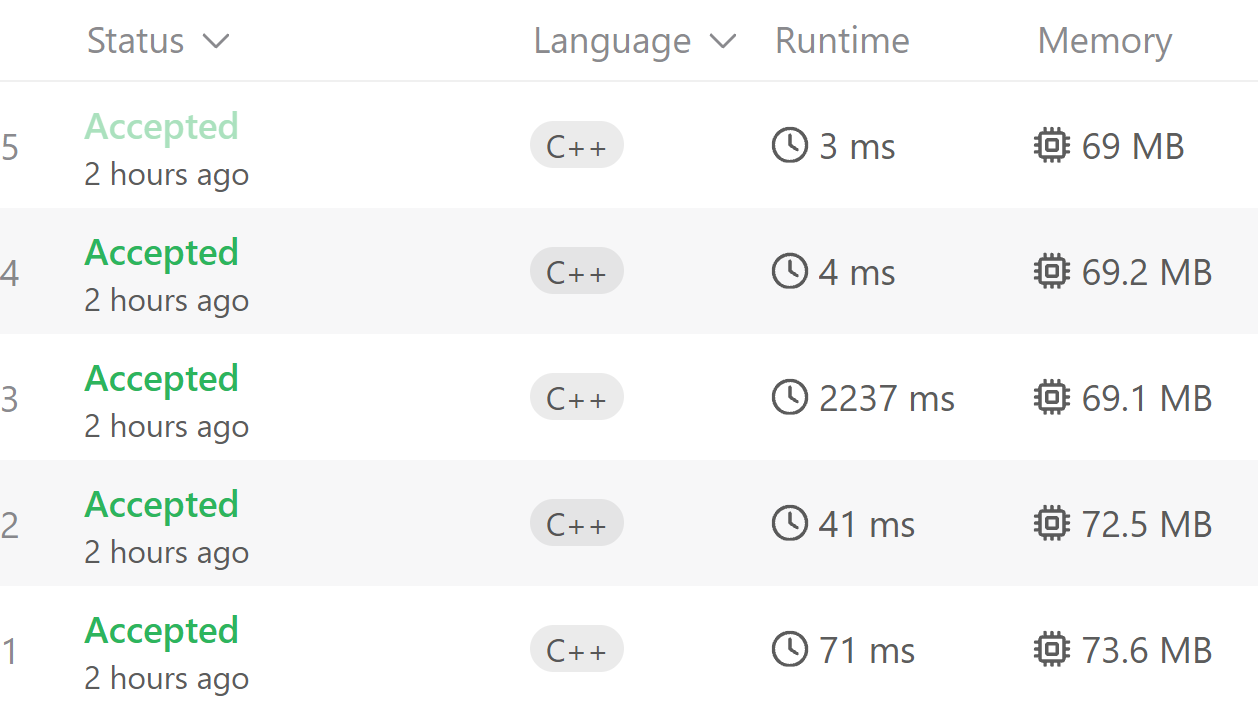
전체 성능입니다.
알고리즘은 제발 사서드세요
하지만 구현해보는 것도 좋겠죠
'Algorithm > PS' 카테고리의 다른 글
| [Leetcode] Daily Temperatures 풀어보기 (0) | 2026.09.19 |
|---|---|
| [Leetcode] Longuset Substring Without... 풀어보기 (0) | 2026.09.18 |
| [Leetcode] LRU Cache 풀어보기 (0) | 2026.09.16 |
| [알고리즘] 미로탈출 (0) | 2026.08.12 |
| [알고리즘 풀이] 구명보트 (0) | 2026.08.06 |